


 Fashion for Ladies

No Table Saw? No Problem

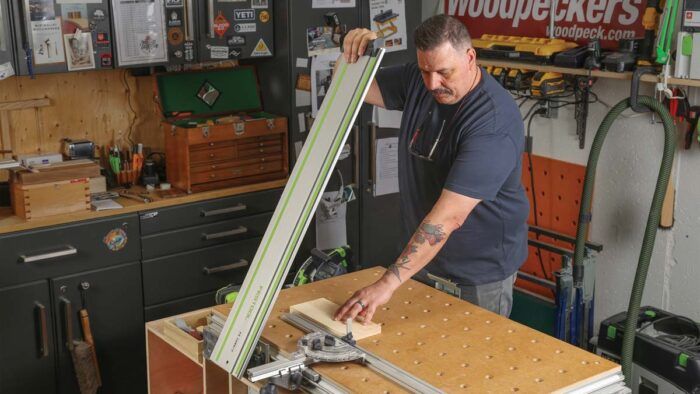
Synopsis: A table saw is often seen as essential to a woodshop, but Vic Tesolin has decided he doesn’t need one. In this article, he shares the ways he has found to accomplish tasks often done on a table saw with other tools: cutting with and across the grain; cutting miters and bevels; ripping bevels; cutting dadoes, grooves, and rabbets; and cutting tenons.
A table saw is often seen as a must-have for any shop, but not having one shouldn’t be a barrier to taking up the craft. While a table saw does perform a variety of valuable tasks, for the people who don’t have the space or budget for one, or who are uneasy about using one, there are workarounds.
I’m not against using a table saw, and I’ve owned table saws in the past. Despite all the tasks a table saw can do, though, I currently don’t use one in my shop. The prime reason is that I don’t like the amount of space it requires. Taking into account the size of the machine plus the infeed and outfeed areas, the average cabinet saw’s footprint can be up to 160 sq. ft. if you plan on processing sheet goods. That’s 40% of a two-car garage.
 When I did have a table saw, it was often cluttered with project parts, tools, and other shop detritus. It was also used as a second work surface with extremely poor work-holding solutions. Not having a table saw works well for the type of woodworking that I do, and I don’t miss it. Instead, I have two smaller, multifunction work surfaces that, combined with a small collection of power tools, allow me to do any kind of woodworking, with any power or hand tool I choose.
Ultimately, you can use whatever tools and techniques you want in your shop. You may prefer to use a table saw, but you certainly don’t need one to make beautiful things. For that matter, you also don’t need a single power tool, but that’s a different article. Here I’m focusing on all the things you can do with other power tools or machines such as a track saw, miter saw, bandsaw, and handheld router. Here’s how I do it.
Ripping and crosscutting

When I studied furniture design and making at Rosewood Studio, we were strongly encouraged to rip solid wood on the bandsaw. Ripping can go pearshaped on the table saw, especially if the saw is operating without a riving knife. Ripping can release tension and cause the wood to move. If the kerf closes on the spinning blade, the wood can be thrown back at the operator at a high rate of speed. Space and safety are on a bandsaw’s side. Even a large bandsaw has a much smaller footprint than a table saw, and it is safer because with the blade running down toward the table, the wood has nowhere to go. An argument against using the bandsaw is that the resulting surface is not as nice as that created by a table saw. This may be true, but both machines will leave their scars behind that need to be jointed, planed or sanded away prior to finishing. You have to do a cleanup pass no matter which method you use.

No bandsaw in your shop? That’s OK! You can easily rip solid wood with a track saw fitted with a rip blade. With the Two ways to add angles Miter saws produce miters and bevels just as easily and cleanly as a table saw does, as do track saws and bandsaws. track saw, the wood is stationary and your hands are on the tool moving over the wood. To me, moving a tool across the wood is easier than pushing wood past a spinning blade.
When it comes to crosscutting, that can easily be done with a track saw and work table. Multifunction work tables come with a network of holes, fences, and stops that help to line up cuts and all but guarantee accurate and repeatable cuts. You can also create an auxiliary table for a miter saw that will convert a tool typically suitable for “rough” work to one that is capable of furniture-quality cuts.
| From Fine Woodworking #314
To view the entire article, please click the View PDF button below. |
 |
Fine Woodworking Recommended Products
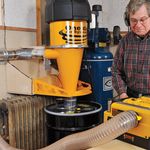
Oneida’s Super Cell Dust Collector
30-Gal with Wall Mount
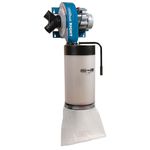
Rockler Dust Right 1250 CFM
You’ll need help to get this heavy unit onto its bracket, but if you’re looking for a central dust collector that won’t gobble floor space, this may be the unit for you.
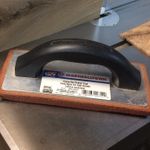
Grout float
The red foam on these grout floats grip well to wood, and the large handle keeps your hands safely away from bits and blades.
Sign up for eletters today and get the latest techniques and how-to from Fine Woodworking, plus special offers.
Download FREE PDF
when you enter your email address below.
View PDF