


 Fashion for Ladies

The New Frontier of Underwater Immersive Content– ACHTEL 3Deep & Apple Vision Pro
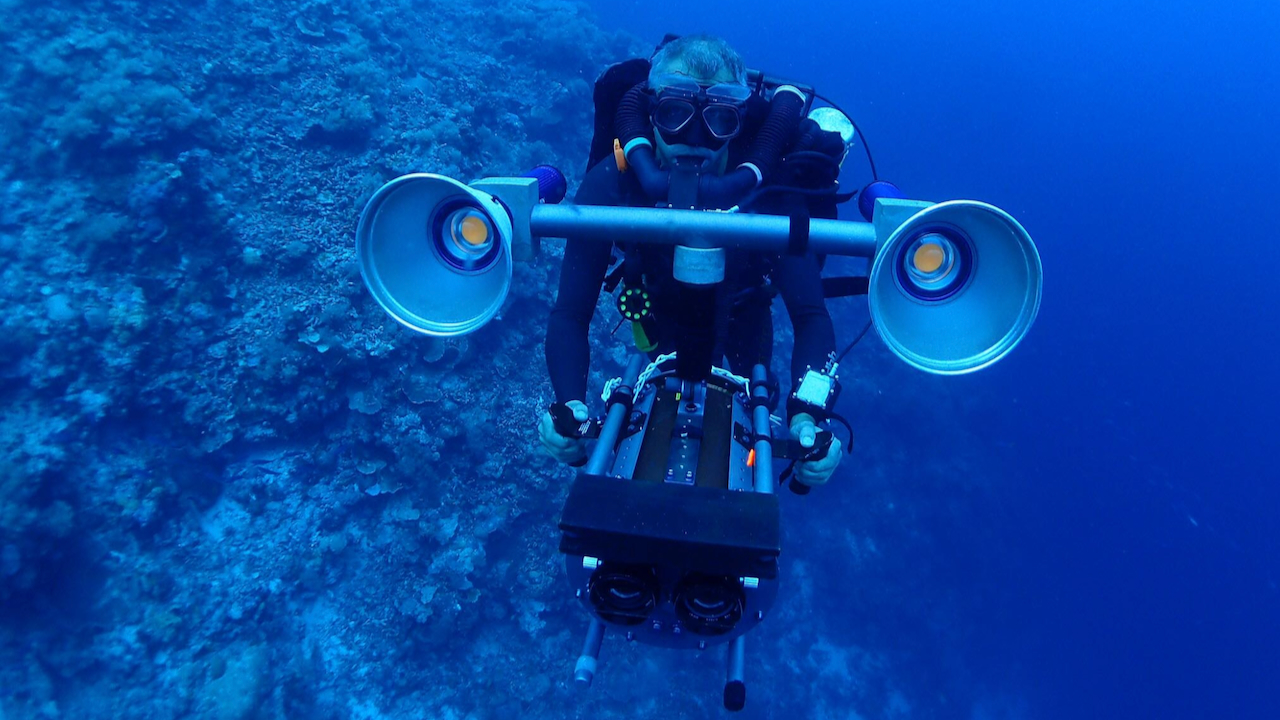
The Apple Vision Pro has created a demand for high-fidelity 180° stereoscopic immersive video. While capturing this on land is a known challenge, doing so underwater has historically been considered an optical impossibility. Here is where the ACHTEL 3Deep Immersive comes in. It is a revolutionary underwater housing designed specifically to meet the rigorous standards of immersive stereoscopic 3D image capture.
Traditional underwater cinematography relies on dome or flat ports, but these are fundamentally incompatible with high-quality 3D immersion due to how they interact with the human visual system.
- The Virtual Image Trap: A dome port acts as an additional lens element, projecting a “virtual image” just inches away from the glass. That virtual image is also curved and not flat, as we used to capture on land.
- Excessive Interaxial Disparity: When two lenses are placed side-by-side behind a single dome, their physical distance apart (interaxial distance) is far too large relative to that close-range virtual image. This creates interaxial disparity so extreme that the human eye cannot comfortably fuse the two images.
- Compressed Subject Roundness: Important consideration when capturing 3D stereoscopic images is object roundness. Object roundness is controlled by Interaxial Distance and defines how round or flat the object will appear to the viewer. When the actual scene is projected onto a virtual image just inches in front of the dome, this roundness can no longer be controlled correctly, and the curvature of this virtual image makes it impossible for human eyes to fuse the two stereoscopic images correctly.
- Beam-Splitter Limitations: While beam-splitters can achieve the close interaxial distance needed for 3D, they cannot accommodate the wide 180° field of view required for the Apple Vision Pro’s immersive format.
The 3Deep Immersive housing bypasses these limitations by abandoning the single-port design entirely. Instead, it utilizes a pair of 180° submersible lenses, optics specifically engineered to be in direct contact with water.
- Superior Optical Design: By removing the air-to-glass interface of a dome, the 3Deep eliminates the virtual image problem. This allows the interaxial disparity to remain within a range that the brain can easily process, ensuring comfortable stereoscopic fusion without the eye strain or “double vision” common in traditional setups.
- Dual Camera Synchronisation: The system is designed to house the ACHTEL 9×7 digital cinema camera, which features a unique “tethered” architecture. A single recording module drives two camera modules simultaneously, ensuring they are perfectly gen-locked and synchronised for flawless immersive 3D experience.
- Titanium Portability: Precision-machined from titanium alloys, the housing is light enough (approx. 20kg ready to dive) for small teams to transport to remote dive sites while maintaining a depth rating of 60m.
By combining submersible optics with the massive data throughput of the 9×7 camera, the ACHTEL 3Deep is currently the only system capable of delivering seamless, high-resolution underwater imaging that modern display devices, such as Apple Vision Pro, demand
The 3Deep Housings are available for sale and rental.
